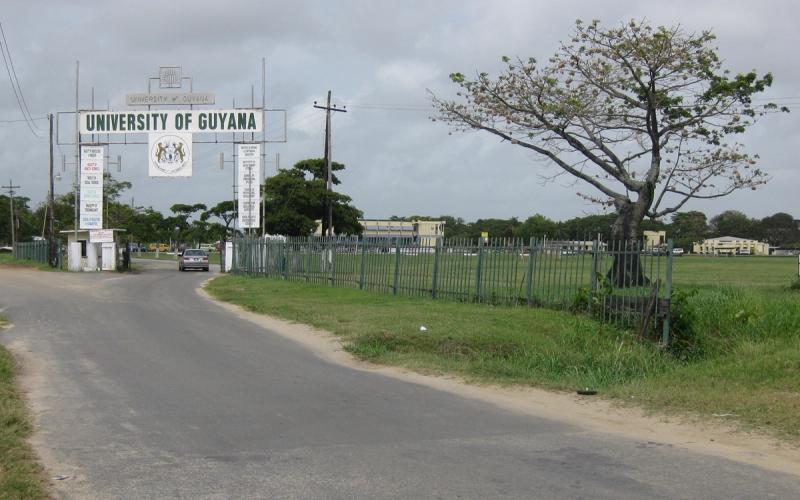
New bill would licence every ambulance service and register emergency medical staff
The Emergency Medical Services Bill 2026, tabled in the National Assembly, would set up the Guyana Emergency Medical Services Authority to licence ambulance services, register emergency medical personnel and enforce national standards, with fines of G$500,000 to G$2,000,000 for breaches.
 Foto: Kaieteur News
A bill before Guyana's National Assembly would place every ambulance service in the country, public and private, under a single licensing regime, and require anyone working as emergency medical personnel to be registered. The Emergency Medical Services Bill 2026 was tabled by Attorney General and Minister of Legal Affairs Anil Nandlall, SC, on behalf of Health Minister Dr. Frank Anthony.
The bill creates the Guyana Emergency Medical Services Authority, which would regulate emergency medical services, ambulance services and personnel, and build an integrated national system. The Authority would keep an Ambulance Services Register and an Emergency Medical Personnel Register, and publish both every year.
Registration categories set out in the text are EMT-Basic, EMT-Intermediate, Paramedic and Instructor, Critical Care Paramedic, and Emergency Medical Dispatcher. No one would be allowed to practise in those roles without being registered.
Inspectors would be able to enter premises, facilities and ambulances, examine and copy records, and seize or detain a vehicle or equipment where a breach is reasonably suspected. The Authority could also impose administrative penalties.
Licensed services would have to meet mandatory national standards, run occupational health and safety systems, keep electronic patient care records, and report serious adverse clinical incidents to the Authority within 24 hours. Personnel would be bound to protect patient confidentiality.
Offences include running an ambulance service without a licence, practising without registration, obtaining a licence or registration fraudulently, obstructing or assaulting personnel, making false emergency requests and misusing ambulance insignia. On conviction, the bill sets fines of G$500,000 to G$2,000,000 and imprisonment of up to six months.
The Authority would be run by a board made up of a chairperson, the chief executive officer and the National Medical Director sitting ex officio, four members drawn from emergency medicine, trauma care, finance or accounting and information technology or digital health, an attorney, and representatives of disaster management, nursing or allied health and civil society. Annual audits by the Auditor General and annual reports to the Minister are also written into the text.
Nandlall described emergency medical services as an essential component of the health care system. The bill still has to be debated and passed before it becomes law.